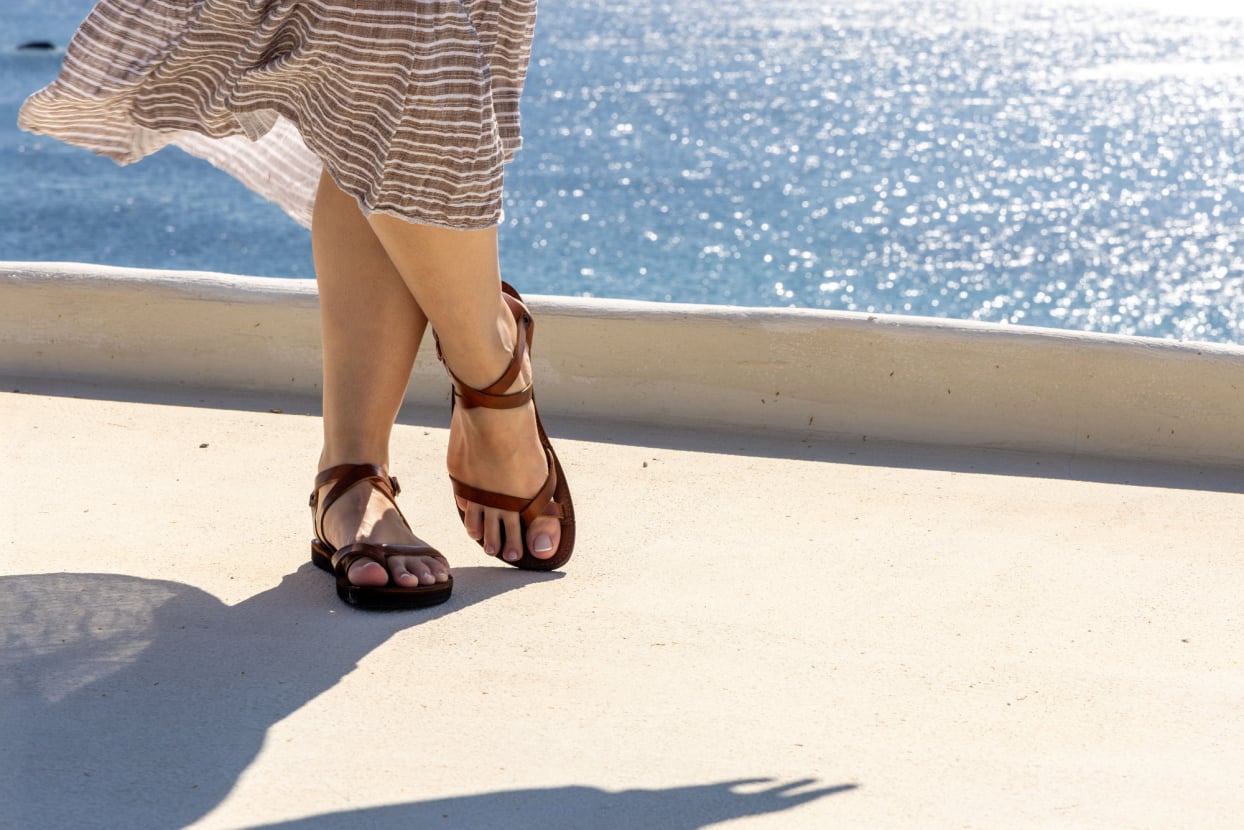
The History of the Sandal — Leandro

The sandal is one of the oldest objects in human history.

Long before architecture, before writing, before philosophy — before almost everything we associate with civilisation — there was the sandal. A sole tied to the foot. A simple solution to the problem of getting around the world.

And yet, in the hands of the ancient Greeks, this simple object evolved into something more. It became a symbol of prestige, beauty, and the relationship between the human body and the earth beneath it.

At Leandro, we handcraft sandals on a Greek island in the twenty-first century. But the thread connecting us to this ancient tradition remains unbroken. It runs straight through — from the workshops of ancient Athens, to a small shoemaker’s workshop in Tavros in 1948, right to our workbench in Tinos today.
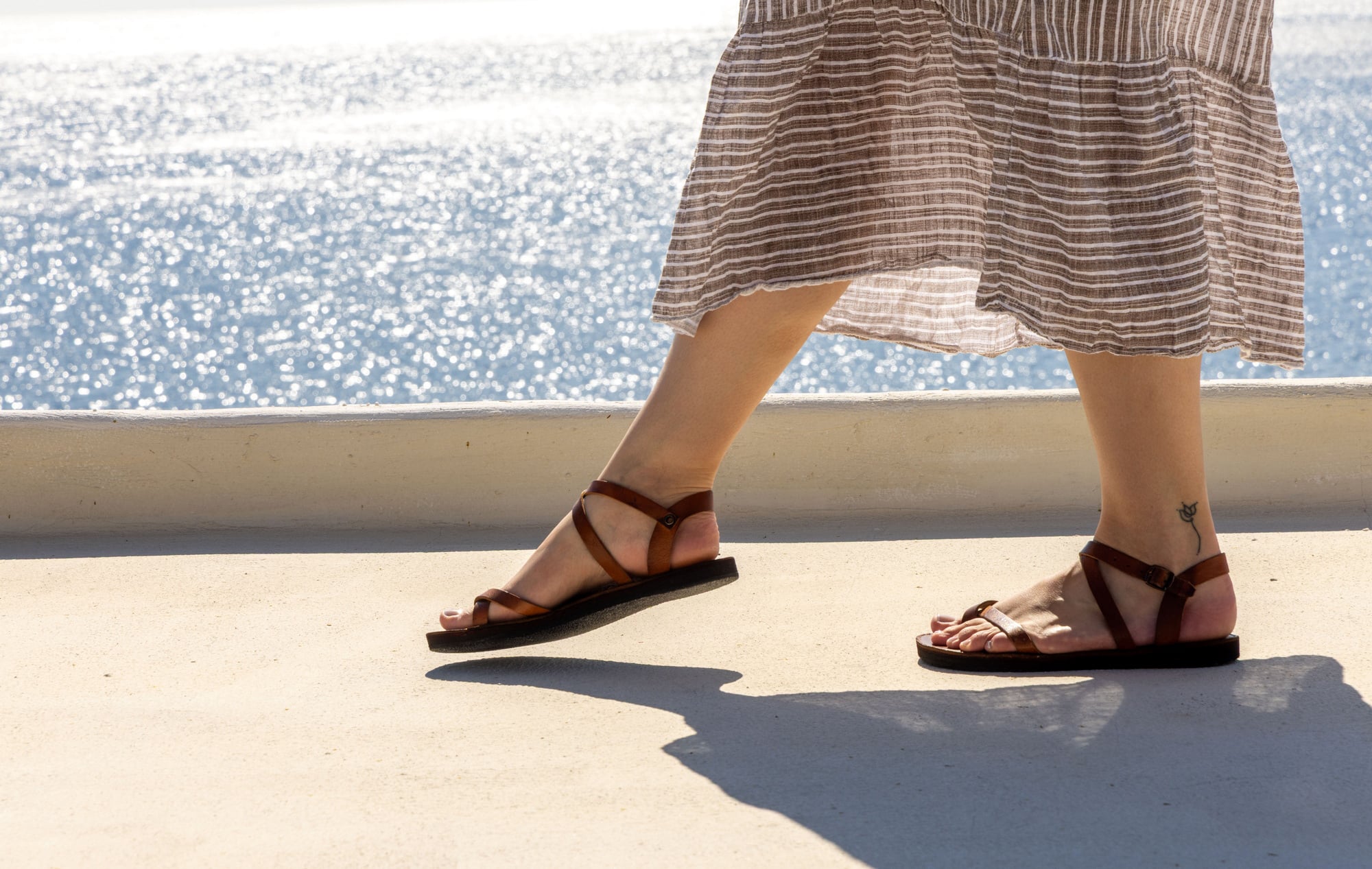
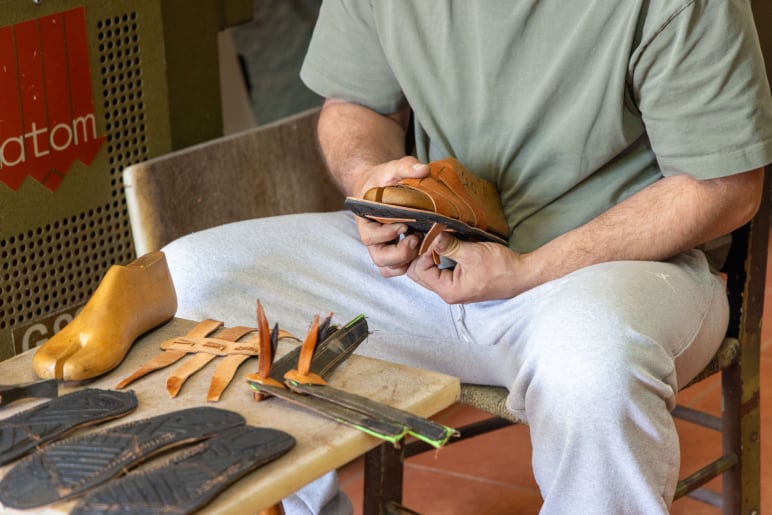
sandals Leandro

The ancient Greeks believed that beauty and utility were not mutually exclusive — that a well-made object was, by definition, also beautiful.
Three generations of the Oikonomou family believed the same.

Leandro. With roots in antiquity. Made for today.

01

The sandal in Ancient Greece

The Greeks called it ‘sandalon’ — and took it very seriously.

In a culture that celebrated the human form above almost everything else, the foot was no mere afterthought. It was sculpted in marble, painted on pottery, and was a subject of discussion among philosophers. And the sandal — which adorned, protected and elevated it — was crafted with equal care.

The sandals of ancient Greece were made from leather, cork and plant fibres, and were fashioned by craftsmen known as skytotomi — literally, leather cutters. These were skilled craftsmen, respected members of their communities, whose work was worn on the feet of citizens, soldiers, athletes and gods.

02

From then until now

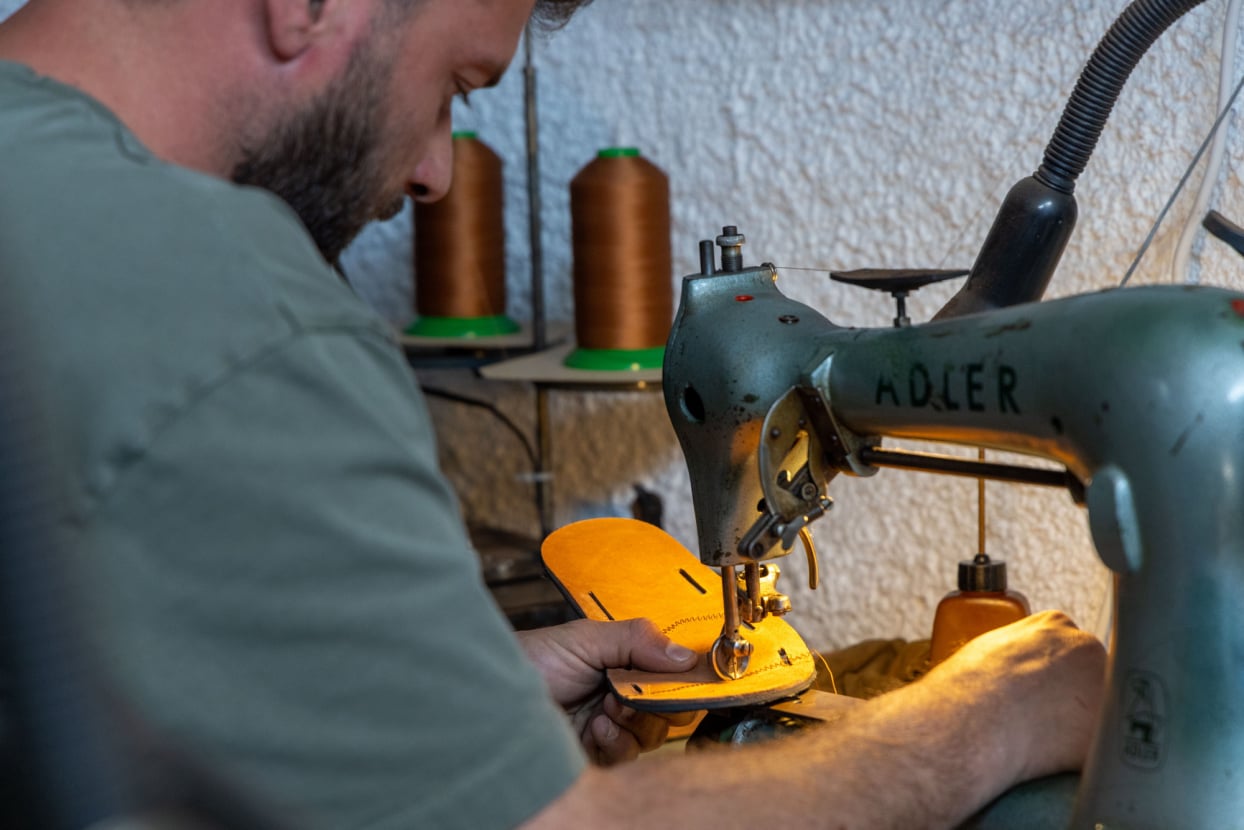
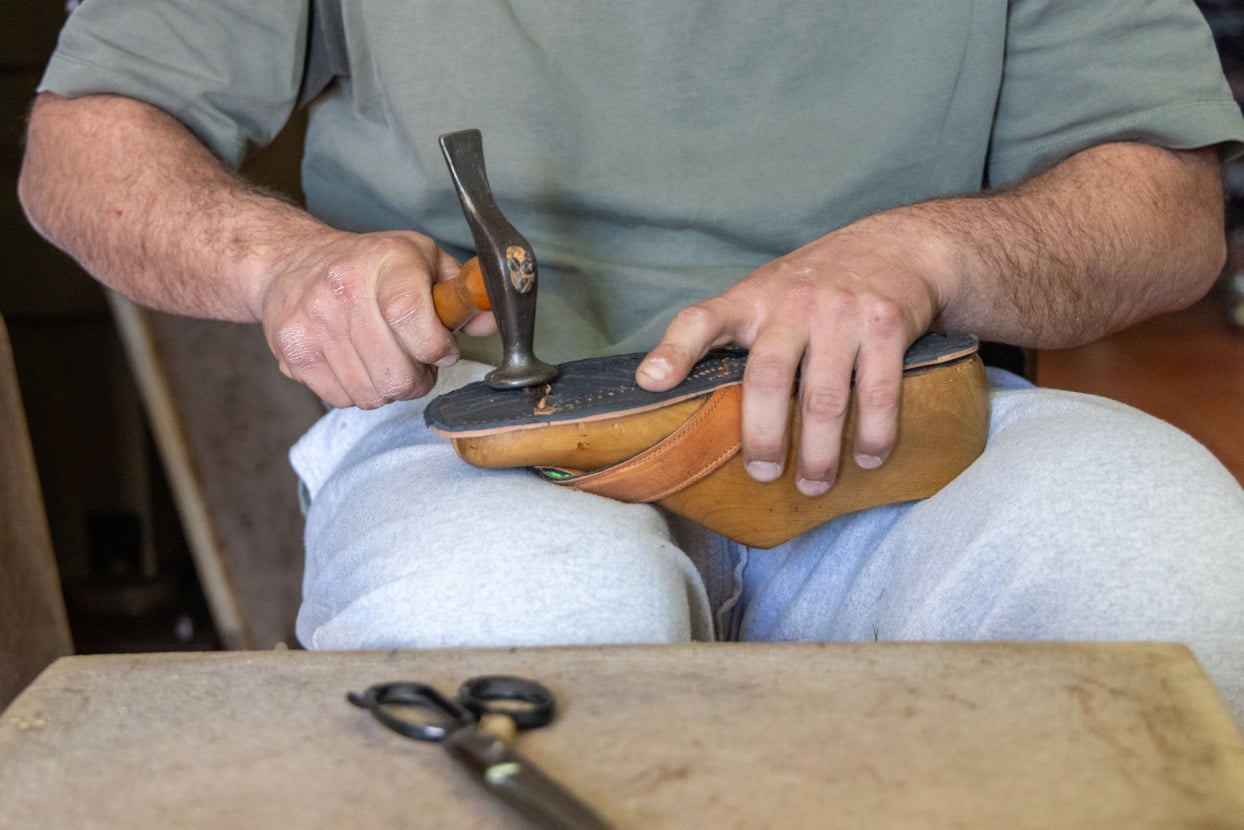
The tools have changed. The leather is cut with modern knives instead of ancient ones. The workshop in Tinos has electric light and a radio.

But the essence of the work has not changed at all.

In 1948, Leandros Oikonomou sat at a workbench in Tavros, Athens, and cut leather with his hands — the same motion performed by the leather cutters of ancient Greece thousands of years before him. His son, Panagiotis, carried on the tradition. Now his grandson, Leandros, carries it on still — on an Aegean island, with the same machines, the same materials, the same effortless care.

The light of the Aegean streams through the workshop window as it always has. The leather smells the same. The hands know what to do.

Some things stand the test of time. A family that makes fine things is one of them.

03

The craftsmen behind the art

It is worth pausing for a moment to consider the craftsmen.

In Athens, the cobblers had their own neighbourhood in the Agora. Their workshops were places of social interaction — philosophers would visit them, whilst discussions took place against the backdrop of the sound of the leather being worked. It is said that Socrates himself spent time in the workshop of Simon the Shoemaker, one of the few non-aristocratic figures mentioned in ancient philosophical texts.

Art was not separate from culture. It was part of it.

These were people who worked with their hands, who knew their materials very well, who were proud of the objects that would be used, worn and walked upon. They were, in the truest sense of the word, creators.

workshop Leandro
sandals Leandro
sandals Leandro
workshop Leandro
workshop Leandro

A sandal is not just a shoe. It is the place where human connect to the earth.

For wholesale orders please contact us.

Contact

info@leandro.gr

+30 2283024286

+30 6972135389

© Copyright 2026 WebsiteGreece.com - All Rights Reserved
No. GEMI 161410038000